nubbliness

As a stitcher, I have a large collection of fabrics of different kinds (mostly cotton). Some I’ve purchased, some I’ve inherited (hello pucci-esque print that was my sister’s grade 9 grad dress), some were passed on, and some I filched from the free table at quilt guild meetings (to be fair, I have also dropped fabric off at the free table; I’m not just filching).
But over time, I’ve grown more and more interested in recycled textiles, particularly vintage ones: sheets, napkins, handkerchiefs, curtains, pillow cases, table cloths, table runners, doilies, dresser toppers (or whatever they are called). I love how they feel in my hands: the slight nubbliness of linen, the softness of worn cotton, the crisp folds of over-starched napkins, the delicate lacings of doilies…. I love their fadings and hints of past use: a patch here, a hint of a stain, some frayings. Sometimes, the fabric is so fragile that I can see through it.
I keep some of these textiles as is: my grandmother’s cross-stitched napkins, my great-aunt’s card tablecloth, a crocheted baby bonnet with a faded ribbon I found on Marketplace and picked up in South End Halifax, a pair of linen napkins from a Winnipeg thrift store, a vintage doily or two.
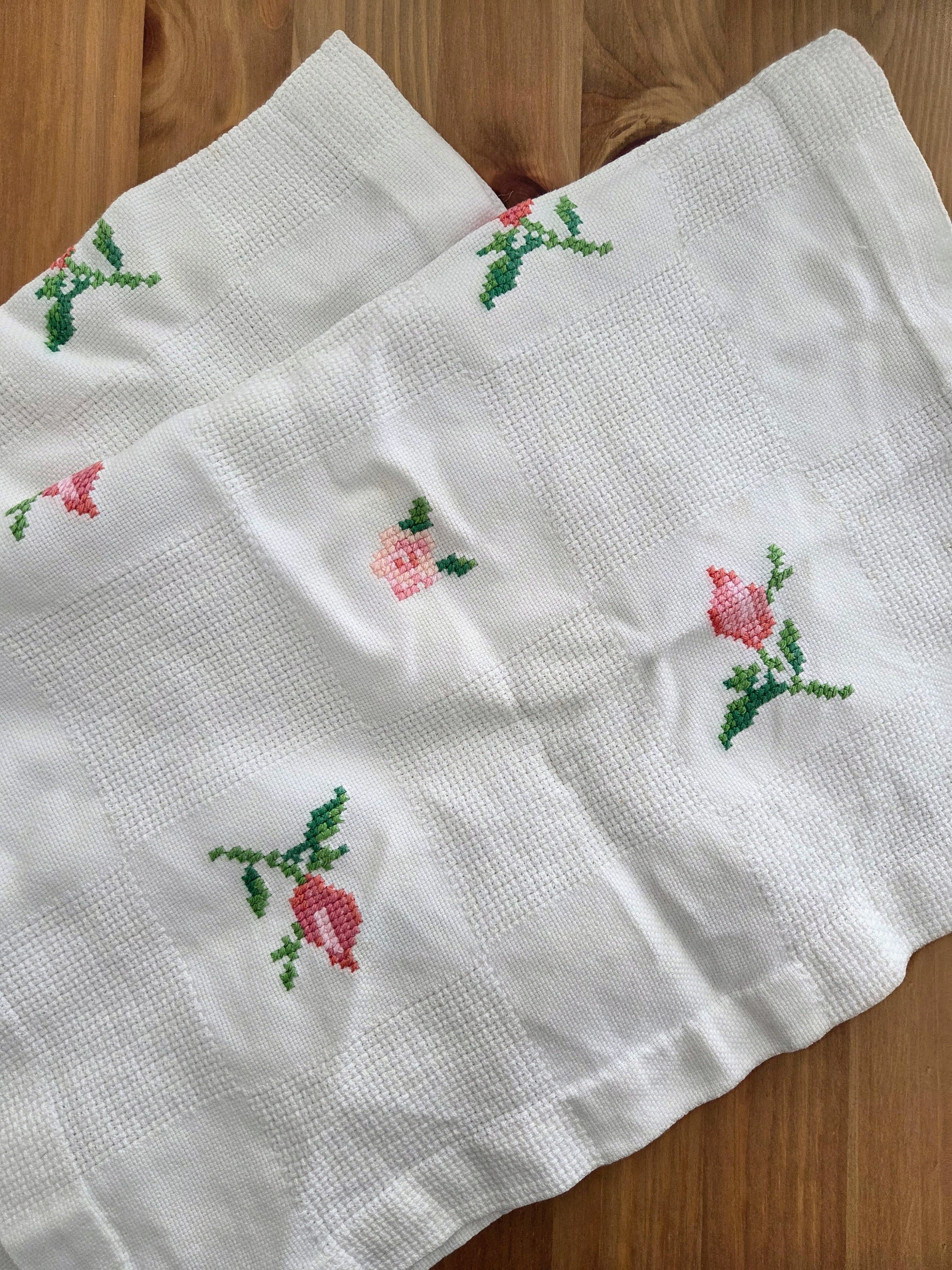
my grandmother sewed and crocheted and knitted and crafted for each of her grandchildren. I only recently learned that she also did this for each of her five daughters-in-law as well. All this with severe arthritis from her 20s onwards. She made these napkins for my mother.
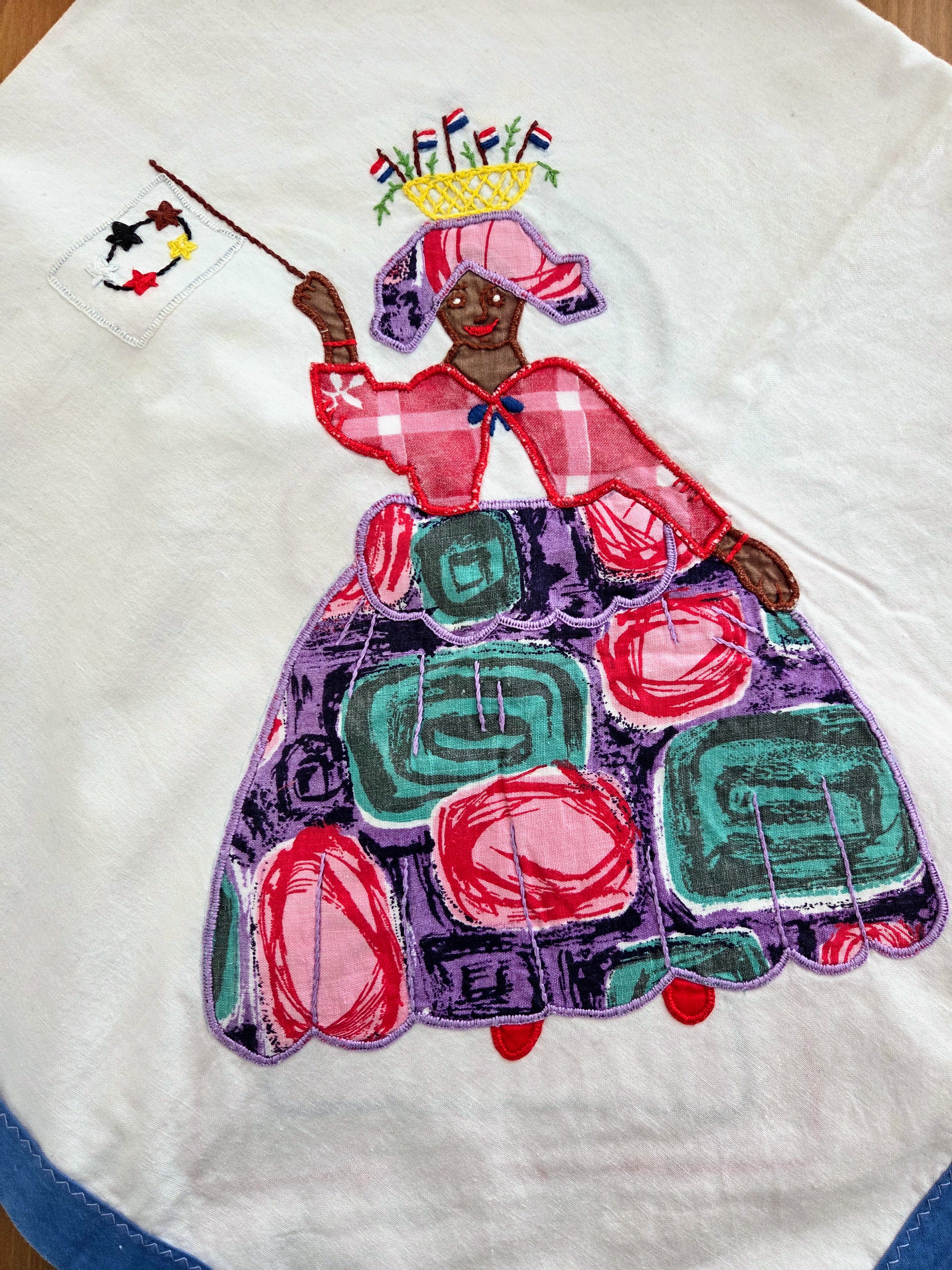
One of the four Surinamese women gracing my great-aunt’s card tablecloth. On her head, she’s wearing an angisa, a folded headscarf traditionally worn by Afro-Surinamese women. In it, are several Dutch flags. In her hand, she’s holding a flag with coloured stars, likely to represent the various peoples who have called Suriname home, whether because they’ve always lived there (Indigenous folks), or by colonization (White Euro settlers), or by force (enslaved Africans) or by something in between (indentured labourers from China, India, Indonesia). There’s a longer and more intriguing background to this tablecloth, but that’s a story for another day.
I call this slowly-growing collection my museum of unattributed stories. There are tales in the vintage and antique textiles, but without context, they are hard to read. What does a stain mean? Where was a pristine tablecloth stored? Who sat around the table? What kinds of conversations did they have? Who picked out the china? What did they eat? Who burrowed into the sheets? Who pulled out the handkerchief at a wedding, a graduation, a birth, a grave side?
But more than this: Who created this work? And then, who repaired it? I wish I knew.
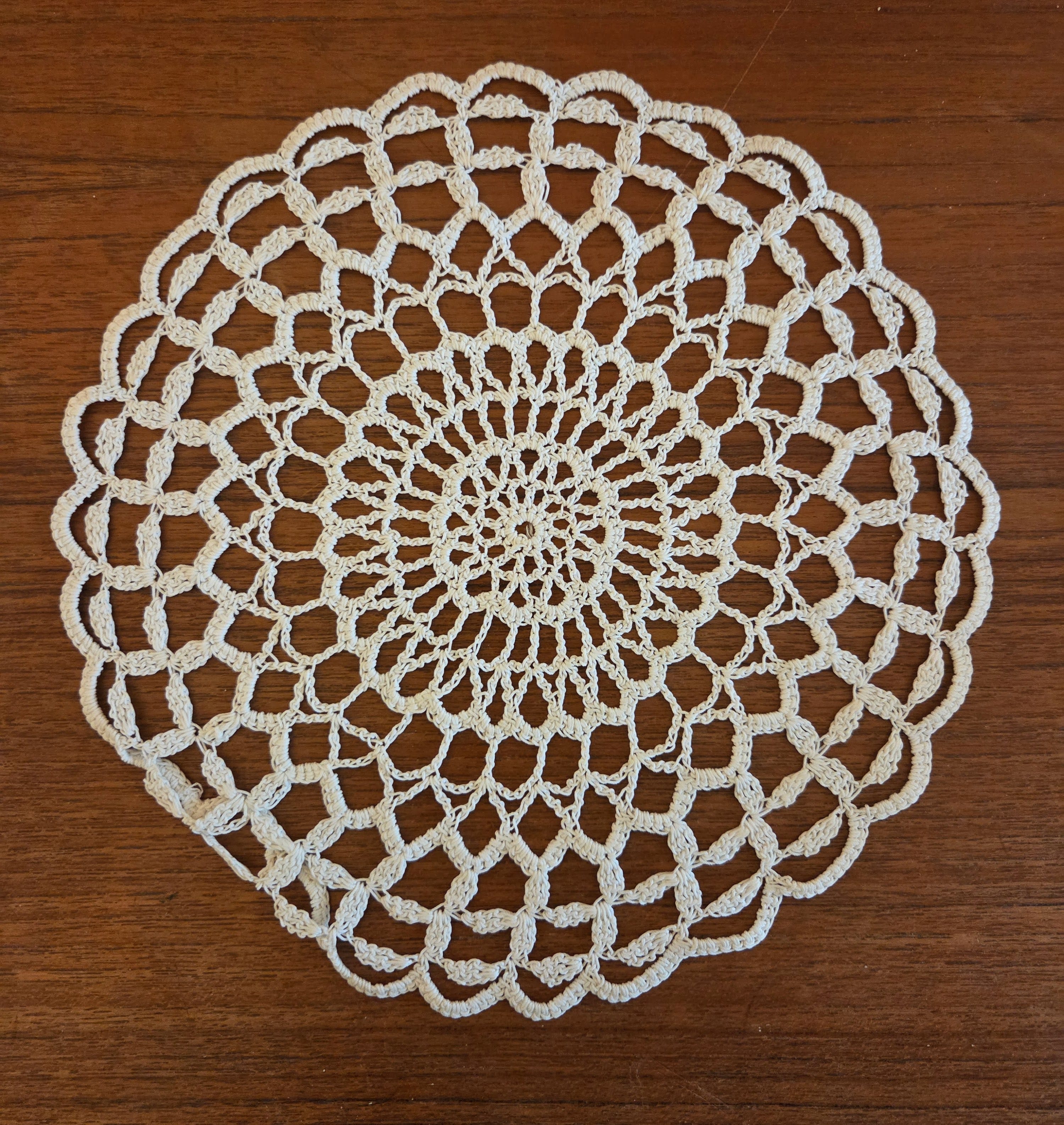
Recently acquired from a thrift shop. Likely dropped off there after someone’s passing.
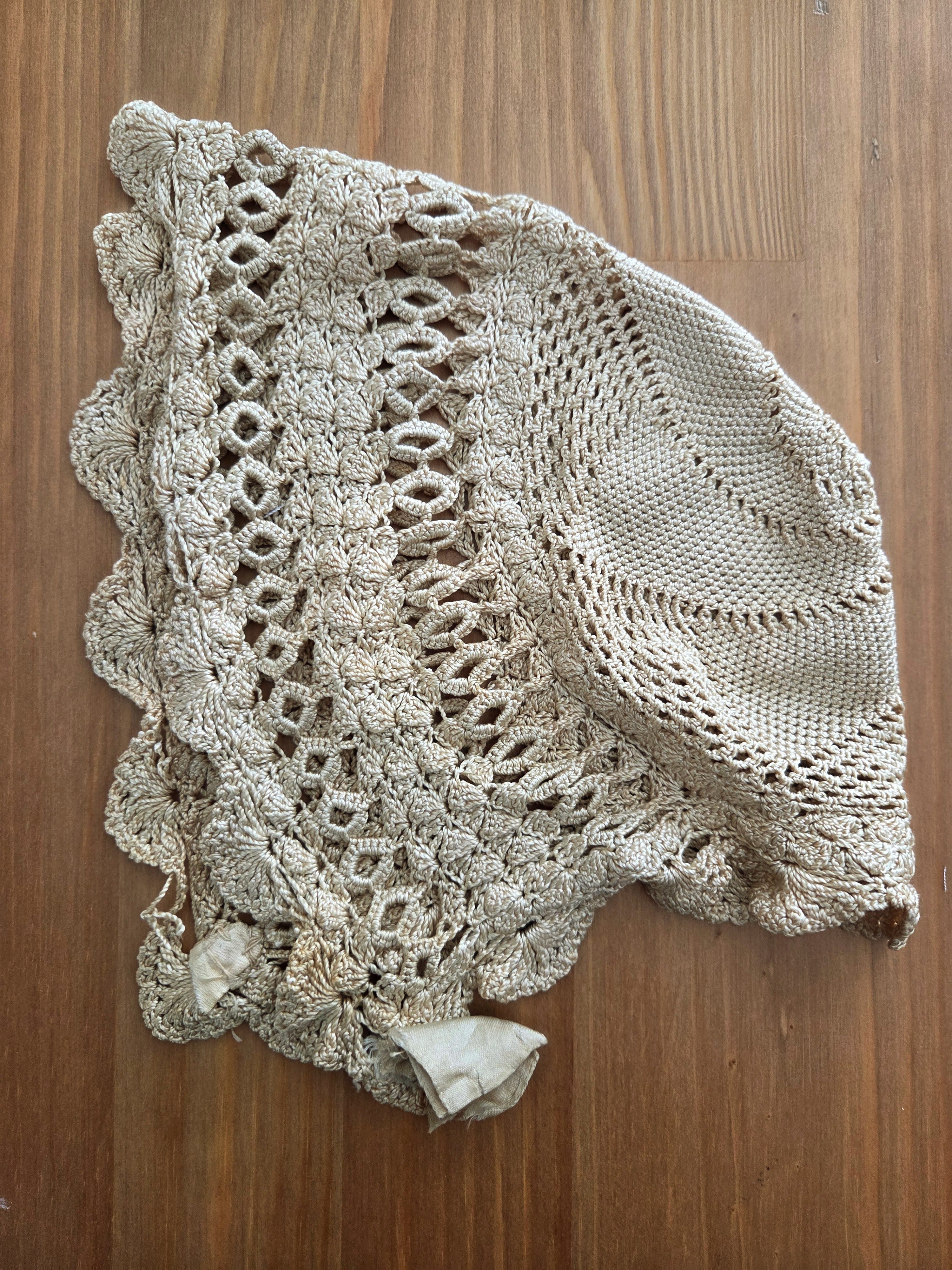
An antique baby bonnet, ribbons still somewhat attached. Found on Facebook marketplace.
Vintage and antique textiles are archives, but of the most inscrutable kind. So many (mostly) women creators lost to history.
Apart from my museum of unattributed stories, I also have a larger stack of vintage textiles. These ones I take apart. I cut them up. I tear them. I dye them. I layer them. And then I stitch them anew.
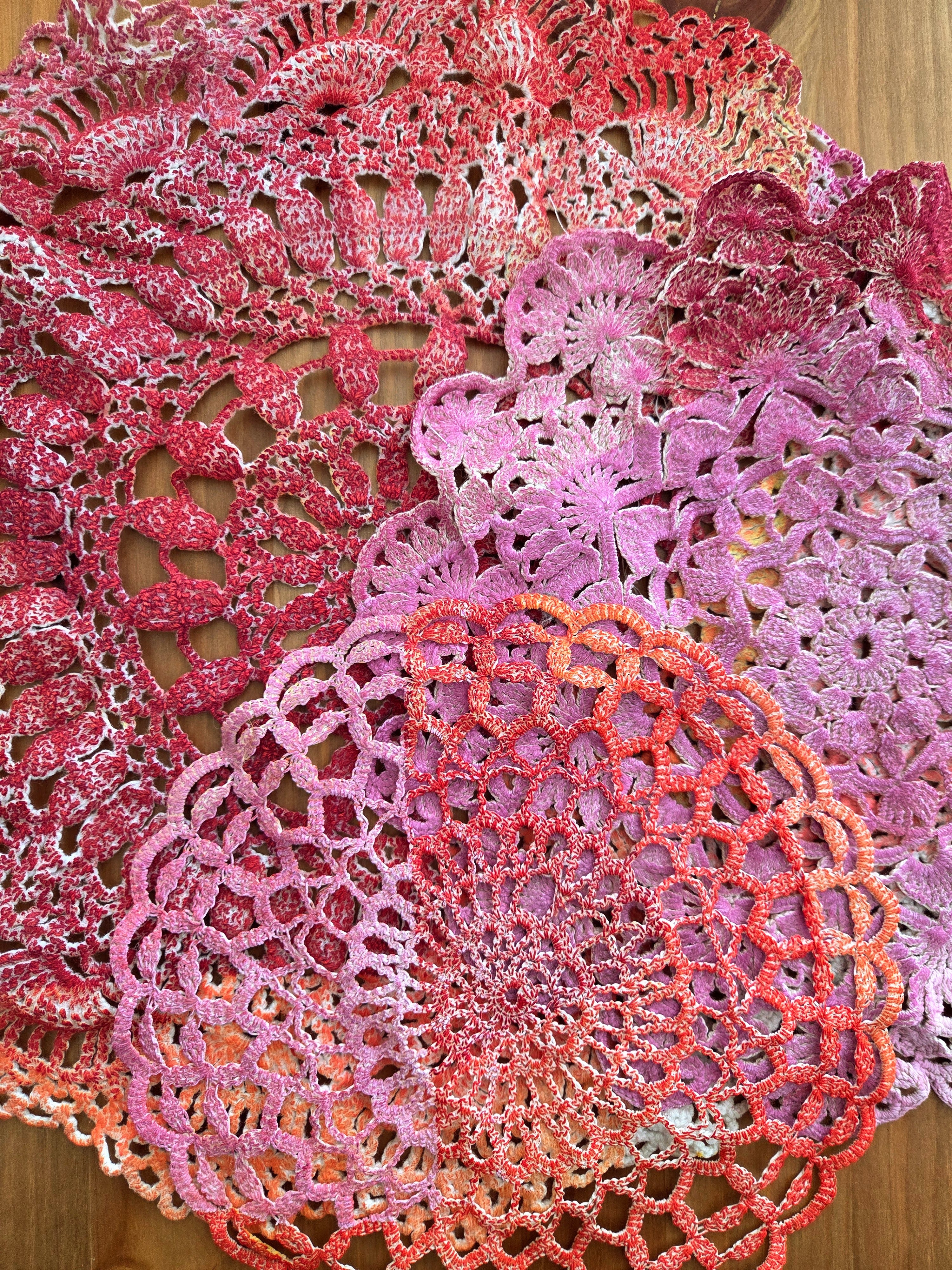
doilies that I’ve been using for gel printing. The one on top is exactly the same as one that I chose to add to my “museum.”
Maybe that’s sacrilegious. I have sometimes wondered this myself. Mostly, I see it as a conversation: vintage textiles are thinking material. In their nubbly, crisp, soft, warm, stained, patched, frayed fragile lacings, they give me insight, offer inspiration, and open new ways of thinking about the relationships between past and present.
What I’m reading: Soulful Stitch by Cas Holmes and Deena Beverley is all about the ways these two artists have used stitchery to work through challenging times in their lives, and the healing that comes out of their creative practice.
© Sonja Boon, 2026
This post is 100% human-created. Generative AI is premised on the theft of creative labour and relies on continued exploitative labour and environmental destruction. I do not use generative AI to research, write, develop, revise, or edit any of my work.
I have a bedspread crocheted by Mrs Mohr that you can have. Still starched and in a bag.